Black Peppercorn: Silk Road to Modern Science
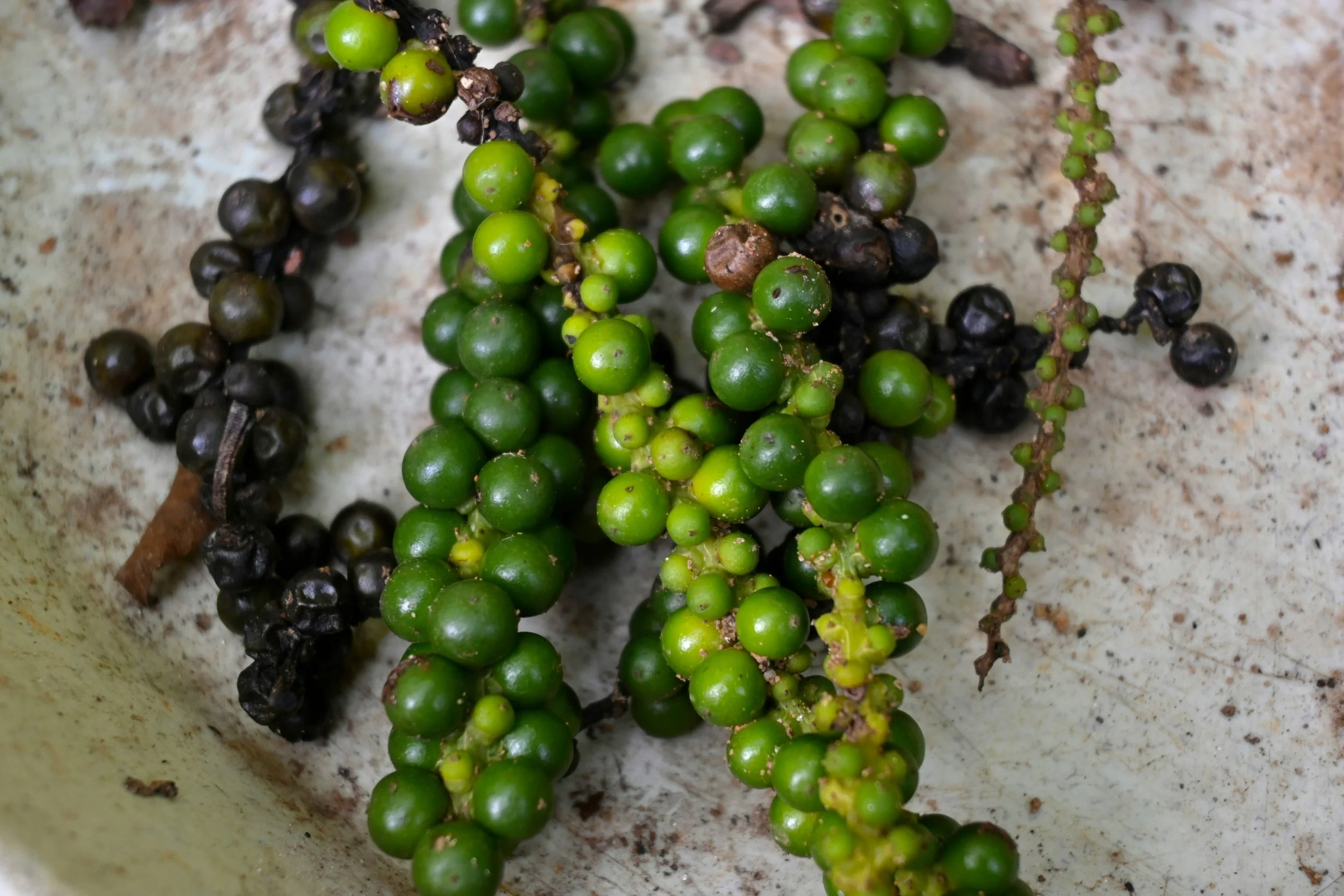
Introducing black peppercorn
Black peppercorn is a ubiquitous spice found on nearly every table in the United States. It is used to spice dishes from Mexico to India, Italy, France, and the Middle East, and is the most widely used spice in the world (Cohen, n.d.). This humble little berry was once coined “black gold” and “king of spices” and is now celebrated for its antioxidant and insulin-supporting mechanisms (Lyon, n.d. & Thottam Farm Fresh, 2020).
Harvest and history of black peppercorn
Peppercorn is harvested from a flowering vine which thrives in the southern region of India, cultivated first in Malabar, India over 3 thousand years ago (Lyon, n.d.). To this day, Malabar is known for its peppercorn production. Peppercorn berries grow in long, grape-like bunches, and are harvested before they reach ripeness which ensures the pungent, spicy bite we are familiar with (Indian Culture, n.d.). Green and white peppercorns are harvested from the same plant, but are picked at different stages of maturity and have slightly different flavors (Indian Culture, n.d.). After harvesting, the berries are fermented in the sun, then they are washed and blanched in hot water (Thottam Farm Fresh, 2020). Finally, the peppercorns are dried in the sun, a process which takes between 5-12 days (Thottam Farm Fresh, 2020).
Due to southern India’s hot climate, peppercorn production thrived and soon reached the Silk Road. The spice traveled to Egypt and Rome where it was used for culinary, medicinal, and mummification purposes. Peppercorn was so precious that when Rome was captured in 410 CE, 3 thousand pounds of black peppercorn was the currency demanded for their ransom (Indian Culture, n.d. & Lyon, n.d.).
Piperine: the bioactive compound in black peppercorn
In modernity, black peppercorn remains a highly prized spice. It may not be used for ransom, but it is valued for both its pungent flavor and nutritional components. Historically, peppercorn has been used medicinally to treat diarrhea, asthma, chronic indigestion, convulsions, insomnia, and epilepsy (Wang, 2022). In resent research, the primary bioactive component in peppercorn, piperine, has been found to reduce inflammation and increase insulin sensitivity (Wang, 2022 & Kumar, 2007).
Inflammation in the body is necessary for fighting infections, viruses, toxins, and bacteria, but too much inflammation can become taxing and contribute to the development of chronic disease like cardiovascular disease, cancer, and diabetes (Furman et al., 2019). Certain molecules support necessary inflammation in the body, but too many can become damaging. Studies show that piperine naturally blocks some of these molecules, thus reducing the risk for chronic inflammation and chronic disease (Kumar, 2007).
Piperine is also a potent compound in increasing insulin sensitivity. Type 2 diabetes is a chronic disease found in 11% of the population, with nearly 40% of the population being pre-diabetic (CDC, 2024). This form of diabetes is characterized by insulin resistance, which means that the body cannot utilize glucose in the blood stream. Over time this leads to high levels of blood sugar which is extremely damaging to the body. One study conducted on rats found that piperine can reduce fatty buildup in the liver as well as increase insulin sensitivity (Wang, 2022). This is very promising research for supporting diabetes prevention.
Incorporating peppercorn into the diet
There are so many delicious ways to use peppercorn in cooking. If you’re looking to use larger quantities beyond basic seasoning, try some recipes that use this spice as the central element. Easily the best way to enjoy black peppercorn is in masala chai, which also celebrates the spices origins in India. Black peppercorn also works wonders as a marinade or crust for proteins like tofu, chicken, steak, or tempeh. Next time you’re in the kitchen, consider spicing up your dish with some black peppercorn to enjoy its pungent spice and nutritional benefits.
References
CDC. (2024, May 15). National diabetes statistic report. https://www.cdc.gov/diabetes/php/data-research/index.html#:~:text=Prevalence%20of%20both%20diagnosed%20and,Table%201a%3B%20Table%201b)
Cohen, S.D. (n.d.). You don’t need dozens of spices in your kitchen, just these 8. WSJ. https://www.wsj.com/story/the-only-8-spices-you-need-in-your-kitchenand-how-to-use-them-c46a07e2
Furman, D. et al. (2019). Chronic inflammation in the etiology of disease across the lifespan.
Indian Culture. (n.d.). Black pepper: the king of spices. Government of India. https://indianculture.gov.in/food-and-culture/spices-herbs/black-pepper-king-spices#:~:text=In%20India%2C%20Malabar%20was%20the,been%20around%20since%20time%20immemorial
Kumar S., Singhal V., & Roshan R. (2007) Piperine inhibits TNF-⍺ induced adhesion of neutrophils to endothelial monolayer through suppression of NF-kB and IkB kinase activation. Europian Journal of Pharmacology.
Lyon, S. (n.d.). Black Pepper. University of Wisconson. https://www.uwsp.edu/sbcb/tropical-conservatory/black-pepper/#:~:text=Origins%20and%20history%3A,parts%20of%20the%20old%20world
Nature Medicine. 25, 1822-1832. https://www.nature.com/articles/s41591-019-0675-0
Thottam Farm Fresh. (2020). How are black peppercorns harvested, processed and produced? https://thottamfarmfresh.com/how-are-black-peppercorns-harvested-processed-and-produced/
Wang, X., Zhang, Y., Wang, W., Che, H., Zhang, Y. (2022, December). Piperine attenuates hepatic steatosis and insulin resistance in high-fat diet-induced obesity in Sprague-Dawley rats. Nutrition Research. 108; 9-21. https://doi.org/10.1016/j.nutres.2022.10.007